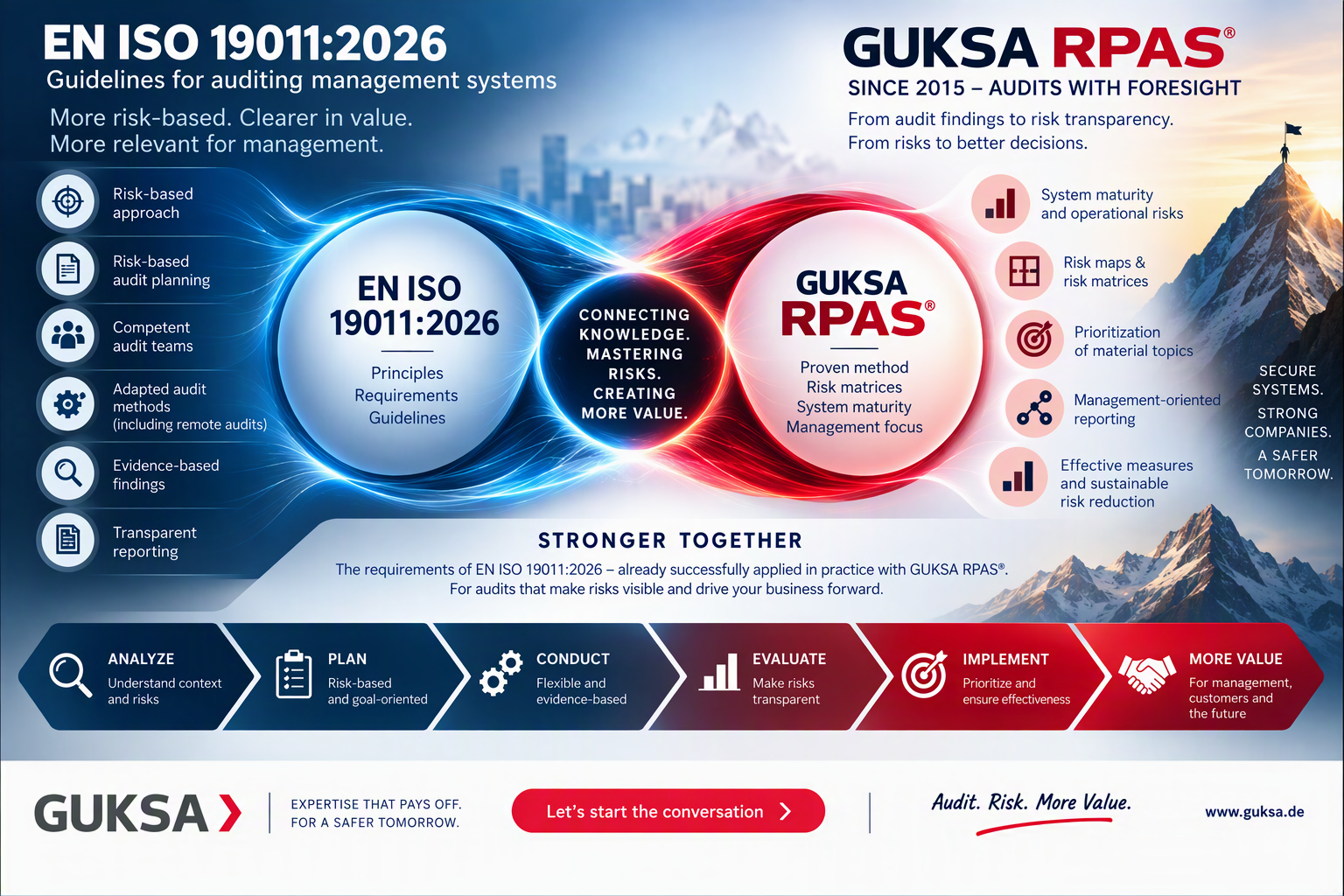
























With DIN EN ISO 19011:2026, the risk-based approach to auditing is gaining significantly greater importance. In the future, audits should not only assess whether requirements are being met, but above all identify the key risks involved, how effectively these risks are being controlled, and how robust the resulting audit conclusions are.
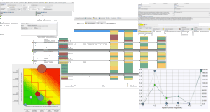
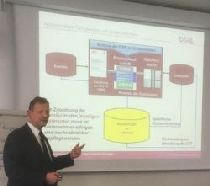
This is precisely where >GUKSA RPAS® has been making a difference since 2015. The approach deliberately goes beyond traditional conformity assessment by combining system maturity, operational risks, and audit findings into a holistic management evaluation. Risk matrices and risk maps create transparency, enable targeted prioritization, and support management in defining effective actions.
The new ISO 19011:2026 therefore reinforces key elements of the RPAS® approach: risk-based audit preparation, prioritization of critical processes, dynamic adjustment of audit planning, risk-oriented evaluation of findings, and management-focused reporting.
The key added value: RPAS® turns audit findings into risk transparency. Rather than simply documenting nonconformities, it reveals where insufficient system maturity may lead to operational risks, which topics require management priority, and where actions can make the greatest contribution to risk reduction.
With RPAS®, >GUKSA therefore provides a methodology that has been established for more than 15 years, including in cooperation with BMW, helping organizations prepare for the increased risk orientation of DIN EN ISO 19011:2026 and further develop audits as an effective tool for risk management and management decision-making.